Business Services / Compliance
Stay Compliant Year-Round
Annual reports, foreign qualifications, initial reports, and DBA filings to keep you in good standing.
About stay compliant year-round
Good standing is something you lose quietly. A missed annual report doesn't produce a dramatic notice — it produces a late fee, then an administrative dissolution months later, usually discovered when a bank, landlord, or acquirer pulls a certificate of good standing and it comes back void. Reinstating costs far more than the report would have.
Most states require an annual or biennial report confirming your address, registered agent, and officers or members, with a fee and a due date tied either to your formation anniversary or a fixed calendar date. Some states also require an initial report within weeks of formation. If you operate in a state other than the one you formed in — an office, employees, or in many cases just sustained business activity — that state requires foreign qualification before you can enforce contracts in its courts.
A DBA, also called a fictitious or assumed name, lets one legal entity trade under a different public name. It's filed at the state or county level depending on where you are, and it does not create a separate company or add liability protection.
What's included
Annual and biennial reports
Prepared and filed in any state, with the state fee shown separately at cost.
Initial reports
Filed inside the short post-formation window states like California and Nevada impose.
Foreign qualification
Registering your existing entity to do business in an additional state, including certificate of good standing retrieval.
DBA / fictitious name filings
Filed at the correct state or county office for your location, with publication handled where required.
Deadline tracking
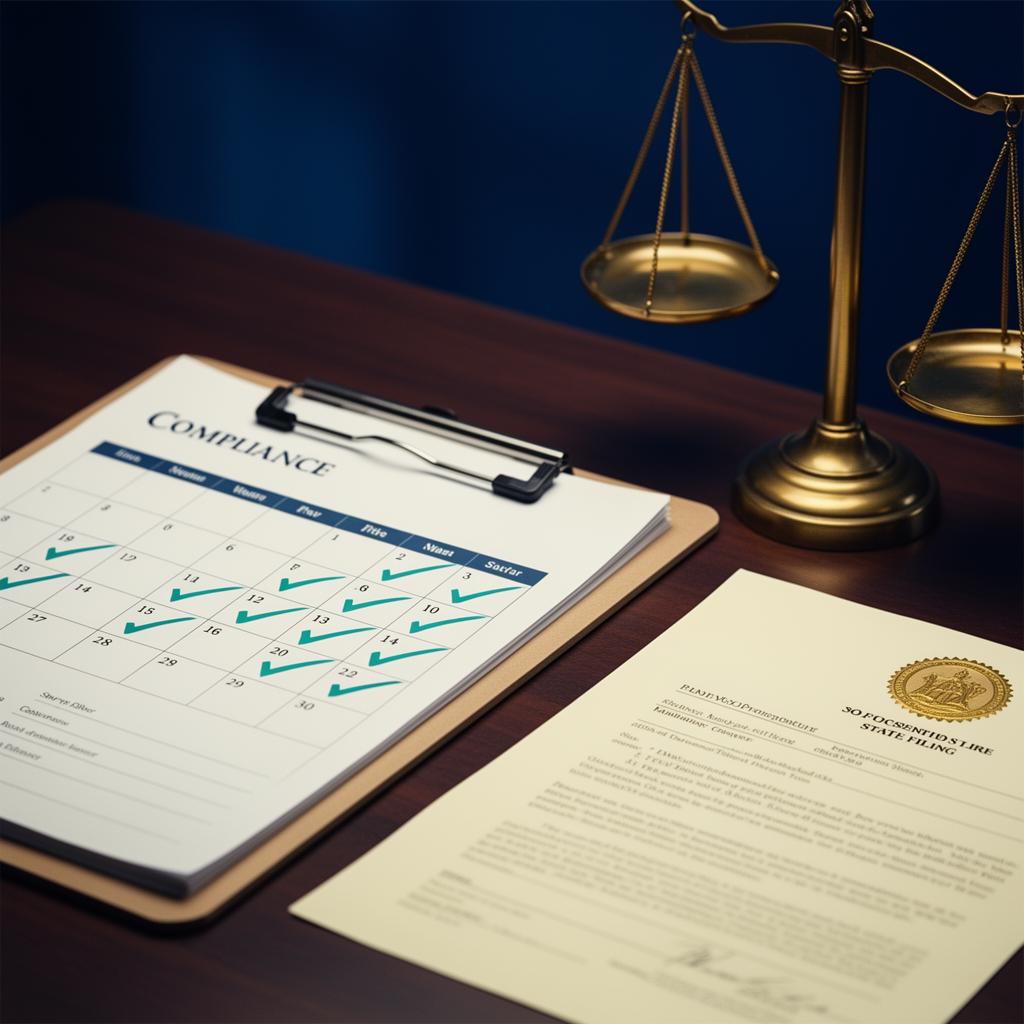
Your compliance dates are stored in your dashboard and emailed ahead of the due date.
Compliance questions, answered
When is my annual report due?
It depends on the state. Some tie it to your formation anniversary month, others to a fixed date for all entities. Once you have an order with us, your dates appear in the dashboard's compliance calendar.
What happens if I miss it?
First a late penalty, then loss of good standing, then administrative dissolution — timelines vary by state. Reinstatement is available in most states but costs more and can require back reports and fees.
Do I need to foreign qualify?
If you have a physical location, employees, or sustained business activity in a state you didn't form in, generally yes. Occasional remote sales usually don't trigger it, but the line is state-specific.
Does a DBA protect my name?
No. It permits you to trade under the name; it doesn't grant exclusive rights. Trademark registration is what gives you enforceable rights to a brand name.